


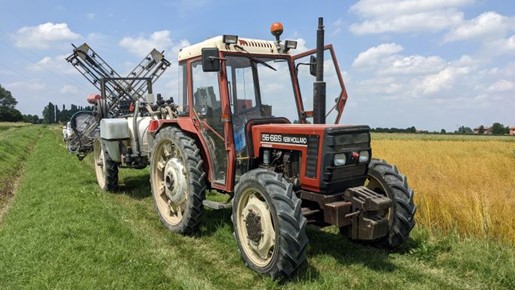
L’un des principaux objectifs du projet 4CE-MED (Camelina : a Cash Cover Crop Enhancing water and soil conservation in Mediterranean dry-farming systems) est de définir, d’optimiser et de tester dans des conditions opérationnelles réelles, des solutions 4CE-MED adaptées localement pour adopter la Cameline comme culture intermédiaire à faible consommation d’intrants, assurant un profit économique à court terme aux agriculteurs méditerranéens (WP2). Le CREA, l’un des partenaires italiens du projet, a réalisé des essais en collaboration avec l’UNIBO afin d’étudier la possibilité d’anticiper la récolte de la Cameline et d’évaluer quelle stratégie est la plus efficace. Pour atteindre ces objectifs, dans un champ expérimental, la Cameline a été récoltée par moisson directe en comparaison avec l’andainage-moissonnage et une stratégie de dessiccation chimique. En ce qui concerne la récolte mécanique, la littérature manque d’informations sur les systèmes les plus appropriés pour à la fois minimiser les pertes de graines et les coûts et raccourcir le cycle de culture. Les avantages et les inconvénients des systèmes de moisson directe par rapport aux aides mécaniques et chimiques censées faciliter le battage et anticiper la récolte ont été évalués.
L’analyse des résultats préliminaires a montré que le moissonnage direct était plus performant que les autres méthodes en termes de réduction des pertes de semences et de coût global. L’andainage et le moissonnage constitue une technique intéressante pour réduire le cycle de culture et anticiper le semis suivant, même si, le séchage ayant lieu dans le champ, le produit risque d’être exposé à des conditions météorologiques défavorables au cours de cette période. Au cours de la prochaine saison de culture, d’autres essais sur le terrain seront effectués pour confirmer les résultats.
One of the main targets of the 4CE-MED (Camelina: a Cash Cover Crop Enhancing water and soil conservation in Mediterranean dry-farming systems) project is to define, optimize, and test under real operational conditions locally tailor-made 4CE-MED solutions to adopt camelina as a low-input cash cover crop, assuring short term economic profit to Mediterranean farmers (WP2). CREA, one of the Italian partners of the project, performed experimental tests in collaboration with UNIBO investigating the possibility to anticipate camelina harvesting, and assessing which strategy is more effective. To meet the goals, in an experimental field, Camelina was harvested by direct combining (DC) in comparison to swathing and combining (SW) and a chemical desiccant strategy (DE). Regarding mechanical harvesting, the literature is lacking information on the most appropriate systems to minimize seed loss and costs and shorten the crop cycle. The advantages and disadvantages of direct combining systems in comparison with mechanical and chemical aids that are claimed to ease the thrashing and, eventually, anticipate crop harvesting were assessed.
Analyzing preliminary results, direct combining outperformed the other methods in terms of seed loss reduction and overall cost. Swathing and combining is an interesting technique to reduce the crop cycle and anticipate the following sowing although, since drying occurs in the field, there is a risk of exposing the product to adverse weather conditions in this period. During the next growing season, further field tests will be carried out to confirm the results.

Photo credit: CREA